Limo companies lose money on invoicing through missed extras and delayed billing. Unpaid accounts that go without follow-up add to the total. This post covers seven billing gaps common in limousine businesses. Each gap has a matching check. It is for limo business owners and fleet managers who run corporate accounts. Invoicing is where revenue disappears after the service is done. Fixing the process costs far less than absorbing the losses.
Key Takeaways
- Delayed invoices and missed extras are the two most common billing losses in limousine businesses.
- Corporate accounts require rate verification on every invoice — errors go undetected until a client disputes the charge.
- Automated billing reduces human error, speeds up payment cycles, and removes manual invoice generation.
- Real-time tracking creates a timestamped trip record that supports accurate billing for wait time and flight delays.
- Transparent pricing before the trip prevents most disputes after it.
- Gratuities, fuel surcharges, and taxes should appear in the booking confirmation — not on the invoice for the first time.
- Systematic follow-up on overdue invoices is one of the most direct ways to improve cash flow.
Why Invoicing Losses Hurt Limo Businesses

A limousine business runs on tight margins. Vehicles, fuel, insurance, and driver costs go out on a fixed schedule. Revenue comes in only when clients pay. Billing errors, disputes, and delays push those payments further out.
For chauffeur operators running corporate accounts, the problem compounds. Corporate clients often carry 30-day payment terms. When an invoice goes out a week late, payment arrives five weeks after the trip. On a fleet with multiple corporate bookings each week, the impact adds up fast. The gap between service delivery and payment puts pressure on working capital. Operators who track that gap closely find it is almost always a billing process problem. Details on how billing gaps affect cash flow are on the Limo Captain payment process page.
Disputed invoices slow things further. When a client questions a charge, payment stops until the dispute is resolved. Most disputes trace back to three causes. The first is an unexpected charge. The second is a rate that does not match the agreed contract. The third is missing information on the invoice. All three are avoidable.
Demand partners book limousine services repeatedly. Luxury hotels, event planners, and travel agencies expect clean, accurate billing. A pattern of billing problems ends those accounts. The loss is not one unpaid invoice. It is the entire relationship.
Where Limo Companies Lose Money on Invoicing
These are the seven gaps where billing losses most often occur. Each one has a matching check in the next section.
Gap 1: Missed Extras and Add-Ons
Most limousine trips include charges beyond the base rate. Tolls, parking fees, and airport surcharges all add cost to the job. Additional stops, extended wait time, and vehicle upgrades do as well. Operators who do not capture these generate invoices that understate the service cost.
This is a logging problem, not a pricing problem. The extra charge exists. The driver is aware of it. No system captures it, so it never reaches the invoice.
Tolls are a consistent example. A driver pays a toll during the trip and does not log it. The invoice goes out without it. On one trip, the amount is small. Across a fleet with many corporate bookings each week, the loss accumulates.
Wait time is another common gap. A client runs 40 minutes late to pickup. That time carries a billable rate. If wait time is not recorded during the trip, the invoice reflects the scheduled booking. It does not reflect the service actually delivered. A logging habit built into the trip close process removes this gap entirely.
Gap 2: Delayed Invoices
The longer an invoice takes to go out, the longer revenue stays out of the business. Fixed operating costs do not pause while an invoice moves through a slow billing process. Insurance, vehicle payments, fuel, and driver wages keep coming.
The standard for service businesses is to invoice within 24 to 48 hours of delivery. Many limo operators invoice at the end of the week. Some wait until a client requests a statement. By then, multiple trips are bundled into one invoice with less context per line.
Late invoices also create a specific problem with corporate clients. A client invoiced two weeks later has less memory of the trip details. Small discrepancies are easier to dispute when the trip feels distant. A wait time charge or an additional stop becomes a point of contention.
Limo software can trigger invoice generation automatically when a driver marks a trip complete. That removes the delay before it starts. The invoice goes out the same day. Payment follows faster as a result.
Gap 3: Wrong Rates on Corporate Accounts
Corporate clients agree to a rate at the account level. That rate applies to every booking under that account. It should be stored in the system, not recalled from memory each time.
When billing is manual, the wrong rate gets applied more often than operators expect. The error goes both ways. An invoice at a lower rate means the operator is undercharging. An invoice at a higher rate produces a dispute and damages the client relationship.
For fleets managing multiple corporate accounts, manual rate tracking is a consistent source of billing error. Each account may carry different structures for airport transfers, hourly bookings, and event work. Account-based pricing stored in the booking system and applied automatically removes the manual step.
A system that stores agreed rates and applies them automatically still needs updating when contracts change. Flag any renegotiated rate immediately. Update the system before the next booking under that account. A stale rate in the system causes the same billing error as no rate at all.
Gap 4: Disputes From Unclear Pricing
A client who does not understand a charge will dispute it. Most of those disputes start before the invoice. Pricing was not clearly communicated at booking.
Pricing structures vary by vehicle class and trip type. Flat rates and hourly fees should be clearly outlined in booking confirmations and contracts. Clients need to understand the base rate and any additional charges before the trip.
Hidden fees are a direct cause of invoice complaints. Gratuities, fuel surcharges, and taxes appearing for the first time look like unexpected additions. In many US and Canadian markets, driver gratuity is typically 15% to 20%. A client who sees that figure without prior context will question it.
Transparent pricing means the client knows what the invoice will look like before the trip. That conversation belongs at booking, not at payment.
Gap 5: Unbilled Wait Time and Flight Delays
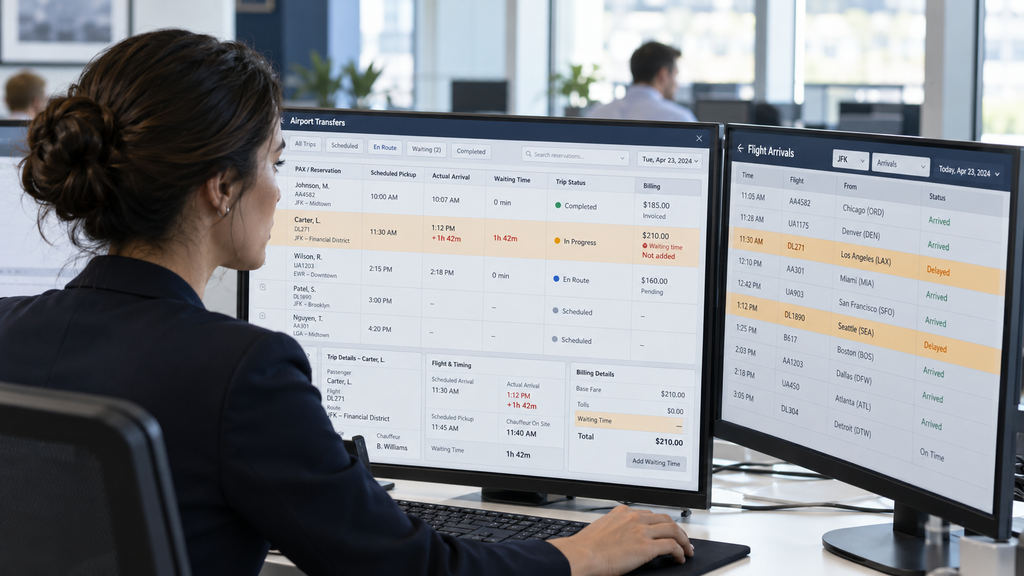
Airport transfers are where billing disputes related to timing happen most often. A flight lands late. The driver waits at arrivals. That wait has a billable rate. If the billing system does not log actual wait time, the operator absorbs the cost.
Real-time tracking improves communication about delays and supports accurate billing when wait time is charged. A client who received updates during the wait is less likely to dispute the charge. The invoice reflects what the client already knew was happening.
Both the flight status and the driver’s arrival time affect billing accuracy. Real-time trip tracking logs those records automatically. The invoice draws from them directly.
Gap 6: Administrative Errors in Manual Billing
Manual billing introduces error at every step. A rate entered from memory instead of a stored contract. A passenger name typed incorrectly. A business name that does not match the client’s accounts payable records. Any one of these can delay payment.
Corporate accounts run through AP systems that match invoice data to purchase orders. An invoice with the wrong company name or booking reference will be held until corrected. That hold can last days or weeks. It disrupts cash flow and requires staff time to fix.
When the system generates an invoice from the completed booking record, there is no manual entry. Trip details, agreed rate, and logged extras come directly from the stored record. There is no opportunity for transcription error.
A structured booking record ensures consistent invoicing across the fleet. Every driver works from the same record. Every invoice reflects the same data. The quality of billing does not depend on who processed the trip.
Gap 7: No Follow-Up on Overdue Invoices
An invoice sent is not an invoice paid. Many limo operators send invoices and then wait. When payment does not arrive, follow-up happens only when cash flow becomes a problem. By that point, the invoice may be 60 or 90 days old.
Systematic follow-up on overdue invoices is one of the most direct ways to improve cash flow. A reminder at 7 days past due and a second at 14 days recovers most accounts. A direct call at 30 days resolves the rest without escalation.
Manual tracking makes consistent follow-up difficult. In a busy operation, overdue invoices go unaddressed when no one checks the ledger. A process that flags overdue accounts on a fixed schedule keeps payment cycles moving.
The Seven Checks That Stop Invoicing Losses
Each check below addresses one of the gaps above. Running them as a regular audit closes the most common billing leaks in a limousine business.
Check 1: Confirm All Extras Before Generating the Invoice
Before any invoice goes out, review the completed trip record for extras. Tolls, parking fees, additional stops, wait time, and upgrades should each appear in the trip log.
Build a confirmation step into the trip close process. Drivers verify extras before marking a trip complete. The system logs those items and carries them to the invoice automatically.
If a completed trip record shows no extras, flag it before invoicing. A long airport run with zero logged extras likely has an unbilled charge.
Check 2: Invoice Within 24 Hours of Trip Completion
Set a billing standard. Every completed trip generates an invoice the same day or the next morning. Not at the end of the week. Not when the client sends a request.
Limo software can automate this. When a driver marks a trip complete, the system generates and sends the invoice. No manual step is required.
Operators not yet on automated billing should assign a fixed daily time to process trips. Processing yesterday’s trips every morning removes the cash flow gap that delayed billing creates.
Check 3: Verify Rates Match the Corporate Account Agreement
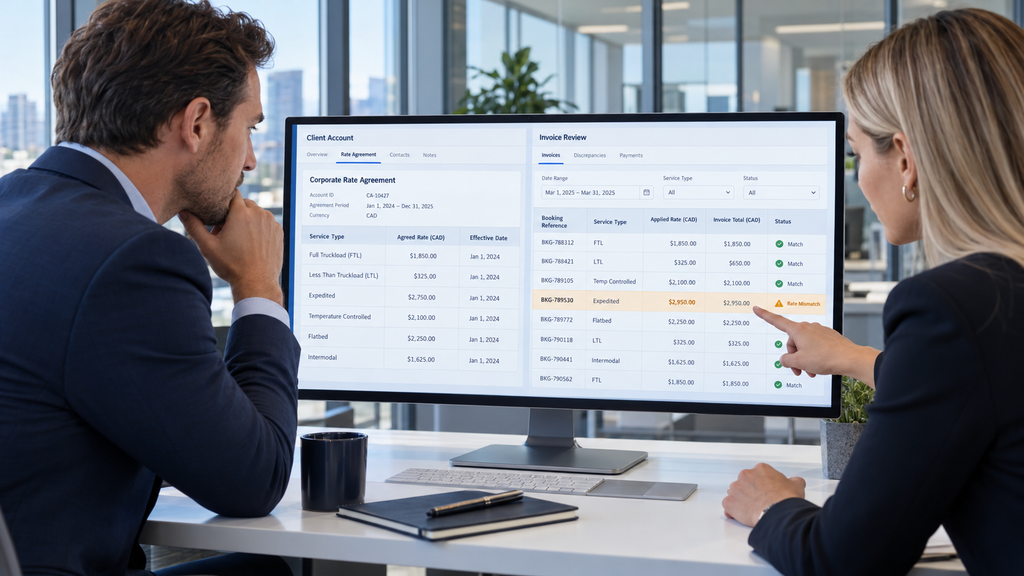
Before sending a corporate invoice, confirm the rate matches the stored account agreement. When rates are in the system, this check takes seconds. Resolving a rate dispute after the invoice has been questioned takes much longer.
Conduct a rate audit each quarter. Review every corporate account and confirm the stored rate matches the current contract. Rates agreed 18 months ago may not reflect a more recent negotiation.
Set the rate structure clearly and review it on a fixed schedule. Both the pricing and the billing cadence benefit from the same discipline.
Check 4: Include Clear Payment Terms on Every Invoice
Every invoice should state a specific due date and list accepted payment methods. “Net 30” is ambiguous. A specific date removes interpretation.
Limo services can accept debit and credit cards, digital wallets, and advance payments. Some operators also accept cash or checks. State the accepted methods on every invoice. A client who knows how to pay is more likely to pay on time.
For corporate accounts with established payment cycles, align invoicing timing to those cycles. An invoice timed to the client’s payment cycle moves faster through their AP process.
Check 5: Log Wait Time and Flight Delays in Real Time
For every airport transfer, state the wait time policy in the booking confirmation. Log the driver’s arrival time and any wait start in the booking system in real time. Do not reconstruct it after the trip closes.
Real-time trip updates reduce partner follow-up calls significantly. When a hotel concierge can see the driver’s location, they do not need to call dispatch. When the client can see the driver waiting, the timing charge is not a surprise.
A timestamped trip record is the evidence when any timing charge is questioned. It shows when the driver arrived, when the passenger boarded, and how long any wait lasted.
Check 6: Switch to Automated Billing
Manual billing does not scale. An operator running 10 bookings per week can manage invoicing by hand. An operator running 60 cannot maintain accuracy without automation.
Limo software generates invoices from completed trip records automatically. Every field on the invoice comes from the booking record. Passenger name, vehicle type, agreed rate, logged extras, and timing are all pulled from stored data. No reconstruction from memory. No manual entry. Limo Captain’s invoice tracking and billing tools handle this across the full fleet.
When a driver marks a trip complete, the invoice goes out. There is no gap between service delivery and billing. It reduces disputes and removes the dependency on any one staff member.
Check 7: Follow Up on Overdue Invoices by a Fixed Schedule
Build a follow-up schedule and apply it consistently. A written reminder at 7 days past due. A second at 14 days. A direct phone call at 30 days.
For high-value corporate accounts, the 30-day follow-up should be a direct call. Phone calls resolve payment issues faster when the invoice amount is significant.
Accounts with a pattern of late payment need a direct conversation about terms. A repeated reminder cycle is not a substitute for that conversation. Track payments by account on a fixed schedule. That keeps payment cycles moving without adding staff time.
How Limo Software Closes the Billing Gap
Limo software addresses invoicing accuracy at the source. The booking record captures all relevant details at the time of booking and during the trip. Passenger details, vehicle type, agreed rate, and confirmed extras all go into that record. Timing data from real-time tracking is included as well. The invoice is generated from that record, not rebuilt from memory afterward.
Limo Captain connects reservations, automated dispatch, real-time tracking, and invoicing from one platform. Operators do not manage separate tools for bookings and billing. The same system that assigns the driver and tracks the trip generates the invoice.
For corporate accounts, agreed rates are stored and applied automatically to every booking. This removes the manual verification step and the rate errors that come with it. Full details on corporate account management are at limo software for corporate client accounts.
Fleet management decisions also improve when billing data is complete. Operators can see which vehicle types generate the most extras. They can also see which routes produce the most wait time charges. That visibility supports better decisions across the operation. Limo Captain’s reporting tools surface that data at the fleet level.
Transparent Pricing and Customer Satisfaction
Billing disputes affect customer satisfaction directly. A client who disputes an invoice and waits weeks for resolution is less likely to rebook. A client who feels a fee was not disclosed may not return.
Transparent pricing means the client knows what the invoice will look like before the trip. Base rate, vehicle class pricing, the gratuity policy, and applicable fees are communicated at booking. They are confirmed in the booking confirmation. They appear on the invoice exactly as stated.
For corporate clients and luxury hotel partners, pricing transparency is a marker of professionalism. Service quality in the luxury market is judged at every touchpoint, including invoicing. A clean invoice that arrives on time and requires no follow-up signals a reliable operation.
Flat rates or hourly fees should be clearly outlined in contracts. Any charge that varies should be explained in the booking process, not discovered on the invoice. That applies to wait time, additional stops, and peak-demand surcharges. Billing should meet the same standard as service delivery: prompt, accurate, and exactly what was agreed.

Frequently Asked Questions
How Do Limo Companies Improve Cash Flow Through Better Invoicing?
Limo companies improve cash flow by sending invoices within 24 hours of trip completion. Follow-up on overdue accounts also makes a significant difference. Automated billing removes delays from the process entirely. A longer invoice gap requires more working capital to cover costs. Tracking payments by account on a fixed schedule keeps payment cycles moving without adding staff time.
What Is Automated Billing for a Limousine Business?
Automated billing generates invoices directly from completed booking records. When a driver marks a trip complete, the system pulls the rate, extras, and trip details. It then generates the invoice automatically. No manual data entry is required. This reduces errors, reduces disputes, and speeds up the payment cycle for every operator.
How Does Real-Time Tracking Support Billing in a Limo Business?
Real-time tracking creates a timestamped record of each trip. It captures driver arrival time, passenger boarding time, wait duration, and the route taken. That record supports billing accuracy for airport transfers and extended trips. The final charge on those trips depends on actual timing. For corporate clients who review invoices closely, that record is the evidence for any timing charge.
Why Is Transparent Pricing Important in the Luxury Market?
Transparent pricing prevents the most common cause of invoice disputes: unexpected charges. Chauffeur businesses that communicate pricing clearly at booking generate invoices that match client expectations. That reduces dispute volume, speeds up payment, and supports client retention. In the luxury market, transparent pricing is a service standard, not an optional courtesy.
What Should a Limo Invoice Include?
A limo invoice should list the client name, booking reference, service date, and vehicle type. Include pickup and drop-off details as well. Include the base rate, logged extras, the applicable account rate, and a specific due date. Accepted payment methods belong on the invoice as well. In many US and Canadian markets, named gratuity line items remove a common dispute point. Fuel surcharges and taxes should appear as named line items, not as a lump sum.
How Do Corporate Accounts Affect Invoicing for Limo Companies?
Corporate accounts require a separate billing discipline. The agreed rate must be stored and applied automatically to every booking under that account. Invoices need the correct booking reference for the client’s AP process. Payment terms are set by the contract. Corporate clients run through AP systems that flag discrepancies and hold invoices until corrections are made. A clean invoice that matches the purchase order gets paid. An invoice with an error gets held.
Final Thoughts
Every billing error in a limousine business represents revenue that was already earned and then lost. The trip was completed. The service was delivered. The money was owed. A missed extra or a wrong rate means some of that money does not come back.
The seven checks in this post address each of the main invoicing gaps. None require significant investment. They require a consistent process and the right software to run it without adding staff time. Start with the gaps causing the most frequent disputes. Close those first. Then build the process around them.
Limo Captain connects reservations, dispatch, real-time tracking, and automated invoicing from one platform. Operators manage billing for the entire fleet from one dashboard.
The Free plan covers up to 10 trips per month at $0. The Starter plan is $99 per month plus $0.25 per trip. Full plan details are on the Limo Captain pricing page.
Call +1 888-545-8881 or visit limocaptain.com to get started.
Editorial Note: This article was prepared by the Limo Captain Editorial Team in October 2026. Regulatory references are for informational purposes. Verify current licensing and insurance requirements with the relevant municipal authority. Limo Captain is the publisher of this content.