No-shows and late limo booking cancellations can turn confirmed reservations into lost revenue.
By the Limo Captain Editorial Team | August 2026 | Category: Chauffeur Management & Operations | Limo Captain Blog
Key Takeaways
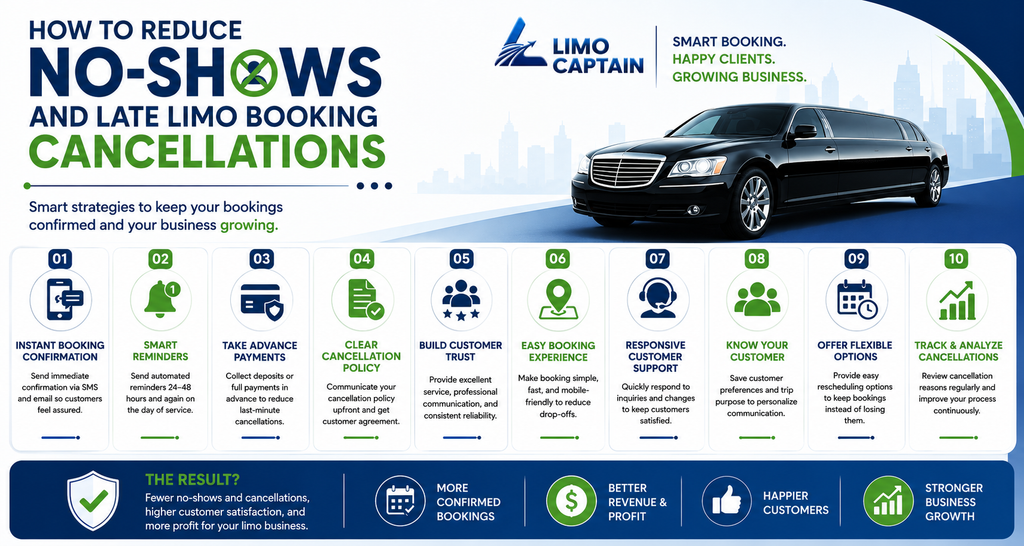
• Confirm every reservation immediately with complete appointment details.
• Send automated reminders at 72, 24, and 2 hours before scheduled rides.
• State cancellation and deposit rules clearly before the booking is completed.
• Require deposits for high-demand dates, events, and large-vehicle bookings.
• Track your no-show rate by service type, booking lead time, and location.
• Centralize reservations, drivers, vehicles, and customer communication in one system.
Why No-Shows and Late Limo Cancellations Are a Business Problem
No-shows and late limo booking cancellations can turn confirmed reservations into lost revenue. Clear confirmations, timely reminders, and a practical policy help limo companies protect booking slots.
Every limo reservation represents planned vehicle time, chauffeur availability, and potential revenue. When a customer cancels at short notice, that capacity may be impossible to sell again. The company loses revenue while still carrying the costs of the scheduled trip.
This guide is for limo owners, dispatch teams, and fleet managers. It covers how to reduce missed bookings without creating unnecessary friction for clients.
Why No-Shows Hurt Limo Companies
A no-show occurs when a client fails to arrive without notice. The impact extends beyond the missed fare. No-shows result in lost revenue and wasted labor costs from chauffeurs already scheduled for the trip.
Missed appointments also prevent other paying clients from booking that slot. Another customer may have wanted the same vehicle or pickup window. This makes no-shows both an operational and a revenue problem.
Clients often fail to show due to forgetfulness or unexpected events. Clients who book far in advance have higher no-show rates. Same-day bookings account for a very small share of no-shows. Advance booking management is where most limo companies can make the biggest difference.
Send an Appointment Confirmation Immediately
An appointment confirmation should be sent the moment a booking is completed. It provides the client with a clear record of their reservation. It also explains what to do if their plans change.
Every confirmation should include:
• Pickup date and scheduled time
• Pickup location and destination
• Passenger name and contact information
• Vehicle or service type
• Company contact details
• Cancellation terms and deposit conditions
Clear appointment details reduce confusion and unnecessary calls to dispatch. Clients should not need to contact the office to verify basic booking information.
Use Appointment Reminders at the Right Time
Appointment reminders keep reservations visible after the initial confirmation. The timing of reminders matters as much as sending them at all.
Recommended reminder windows:
• 72 hours before: for airport transfers, events, and long-distance trips
• 24 hours before: for standard corporate bookings and repeat clients
• 2 hours before: a final confirmation for all bookings
A corporate airport transfer needs different communication from a wedding booking. Earlier reminders give clients more time to contact the company if plans change. Later reminders catch last-minute schedule shifts.
The goal is to remind clients while leaving enough time to reassign the vehicle.
Use Text and Email Reminders Together
Text reminders work well for short, timely updates. 95% of texts are read within three minutes. Email reminders carry more complete booking information and serve as a record for corporate clients.
Automated reminders can be sent via SMS, email, or voice. Use both channels for high-value bookings. Use text for final reminders. Use email for confirmations and cancellation policy documentation.
Canadian businesses should note that commercial electronic messages can be subject to Canada’s anti-spam requirements. Government of Canada — Canada’s Anti-Spam Legislation Requirements include consent, identification, and an unsubscribe mechanism.
Use Automated Reminders to Protect Your Schedule
Manual reminders depend on someone remembering to send them. Automation triggers reminders according to booking dates and service types — automatically. Automated reminders can reduce no-show rates by 35% on average. Every client gets the same sequence regardless of how busy dispatch is that day.
Keep Appointment Details Accurate Before Sending Reminders
Before any reminder goes out, verify the pickup date, time, location, destination, and passenger contact details. Also confirm flight details where relevant, vehicle type, and any special instructions.
Incorrect appointment details create confusion and drive unnecessary calls. Clients should never need to call because their reminder contains wrong booking information.
Connect Google Calendar With Your Booking Workflow
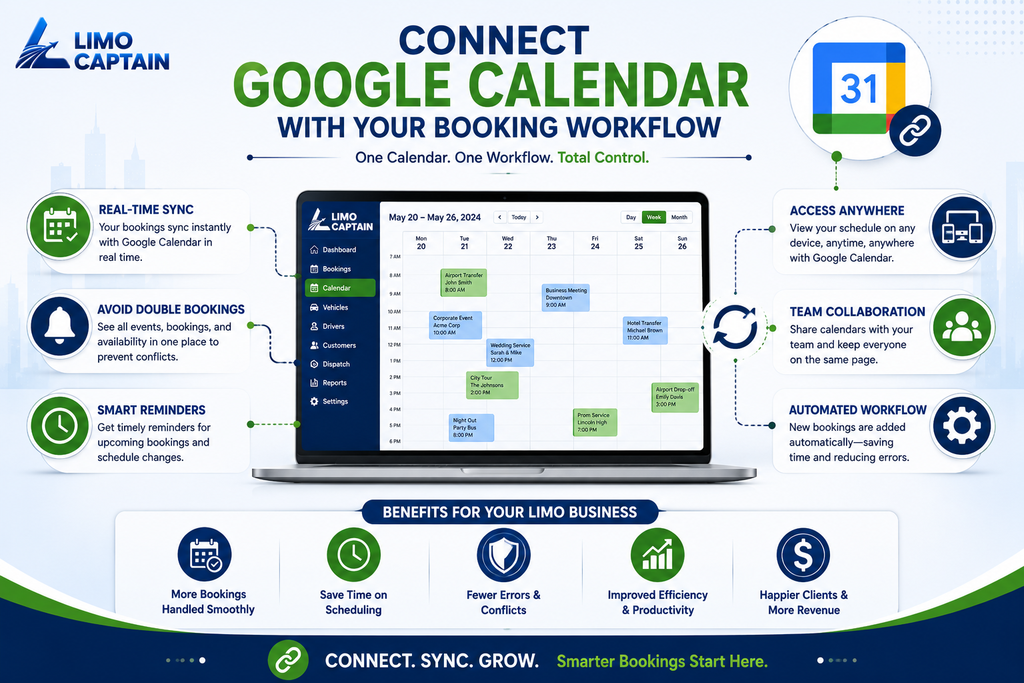
Many limo businesses and corporate clients use Google Calendar to manage schedules. Problems occur when calendar information and booking information live in separate systems.
A connected limo booking system reduces manual updates. It gives dispatchers a clearer operational view of vehicles, chauffeurs, and reservations. The goal is to keep everyone on the same current information — not separate copies.
Prevent Double Bookings
Double bookings create serious operational problems. A centralized schedule makes it easier to view reservations, drivers, and vehicles together. Conflicts can be identified and resolved before they affect a client.
Create a Clear No-Show Policy
A no-show policy should explain what happens when a client cancels without sufficient notice. Clients should see the policy before completing a reservation.
A complete policy covers:
• Cancellation deadlines: 24 hours for standard bookings; 72 hours for events
• Late cancellation rules and any applicable fees
• Deposit terms and what happens to a deposit if the client cancels
• Refund eligibility and processing timelines
• Rescheduling options and how to request them
Communication of clear cancellation rules can minimize no-show occurrences. Office of Consumer Affairs Canada recommends understanding contract terms, including cancellation conditions and deposits, before entering a service agreement.
Consider Deposits for High-Demand Bookings
Deposits help secure bookings where the company commits significant resources. They are appropriate for high-demand dates, large vehicles, long-distance trips, and special events.
Common deposit practices in the limo industry:
• 20% to 30% deposit for corporate event bookings and proms
• 30% to 50% deposit for weddings and peak-season airport packages
• Full prepayment for some outstation and long-distance bookings
Clients should understand deposit and cancellation conditions before paying. Office of Consumer Affairs Canada recommends checking what happens to a deposit when a client cancels.
Deposit amounts and refund terms should appear in the booking confirmation. Not only in small print at checkout.
Manage Last-Minute Cancellations
Last-minute cancellations are difficult because there may be little opportunity to fill the vehicle. The chauffeur may already be travelling to the pickup location.
A clear cancellation process helps dispatch respond quickly. This gives the company a better opportunity to reassign the chauffeur or fill the slot.
Cancellation policies should define what counts as last-minute. For most limo bookings, cancellations within 2–4 hours of the pickup time are considered last-minute. Clients should see this threshold clearly before booking.
Track Your No-Show Rate
You cannot improve a problem you do not measure. Track your no-show rate alongside cancellation data to understand where problems occur.
Useful categories to track include:
• Service type — airport transfers, corporate rides, events, long-distance
• Booking lead time — same-day, 48 hours, one week, one month
• Pickup location and day of week
• Corporate accounts versus individual bookings
Tracking no-show rates helps businesses identify and target problem areas. Clients who book far in advance have higher no-show rates. Longer-lead bookings may need an extra reminder.
There is no single no-show rate percentage that applies to every limo company. Establish your own baseline, then measure whether process changes improve it over time.
Measure Lost Revenue From No-Shows
Lost revenue should be measured beyond the price of a missed ride. Consider scheduled chauffeur time, vehicle costs, and the opportunity to accept another booking.
A useful report compares booked trips, confirmed trips, cancellations, no-shows, and completed trips. This gives management a clearer picture of how cancellations affect the business. It shows where policies need adjustment.
Use Message Templates for Consistent Communication
Consistent communication is easier with approved message templates. A confirmation template includes reservation details and cancellation terms. A reminder template asks clients to review their booking. A cancellation template explains the policy and rescheduling steps. Templates save dispatch time and keep communication consistent.
Make Rescheduling Simple
Not every cancellation represents lost business. A client who cannot use the original slot may still need transportation later. Make rescheduling easy. A clear contact method or a direct reschedule link in the reminder is sufficient.
Connect Reservations With Drivers
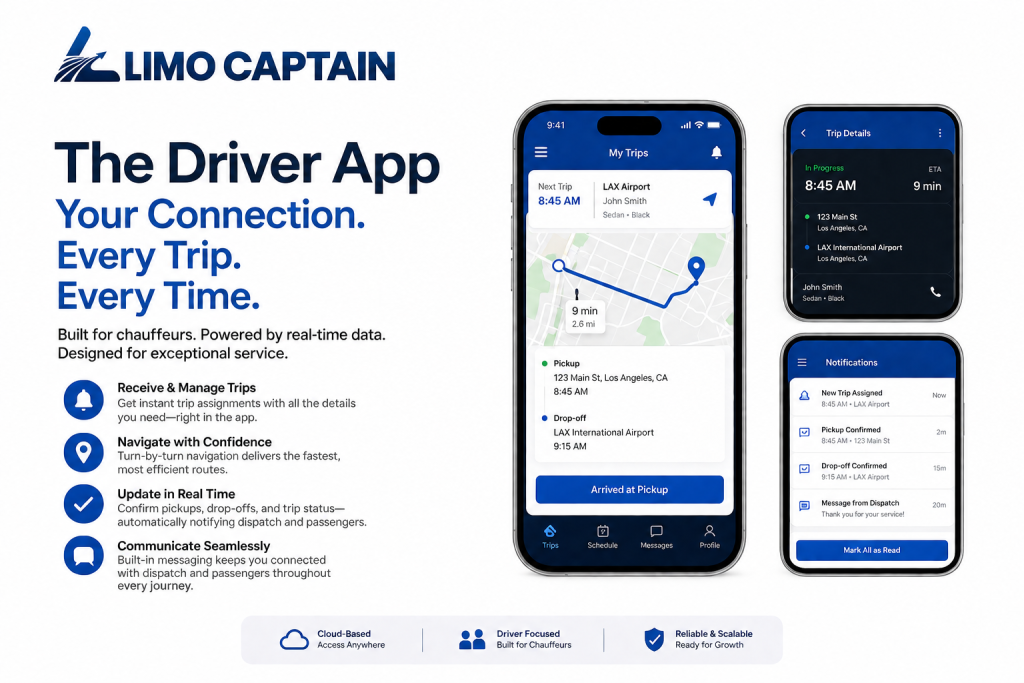
Reducing cancellations is easier when the booking team and chauffeur share the same information. Limo software connects reservations, dispatch, vehicles, drivers, and client communication. A booking change should update everywhere — including the driver app.
Frequently Asked Questions – Limo Booking Cancellations
How Can Limo Companies Reduce No-Shows?
To reduce no-shows, confirm every reservation immediately. Send reminders at 72, 24, and 2 hours before the ride. Keep pickup details, destination, and cancellation terms clear from the start. Make it easy for clients to confirm or reschedule. Tracking the no-show rate by service type and lead time shows where the process needs improvement.
What Should Appointment Reminders Include for Limo Bookings?
Effective appointment reminders should include the booking date, pickup time, pickup location, destination, and contact details. They should explain how clients can change or cancel the reservation. Keeping messages concise makes key information easier to find. Commercial messages in Canada must also comply with anti-spam requirements including identification and an unsubscribe option.
Can Appointment Details Be Managed Through Google Calendar?
Yes, appointment details can be organized through Google Calendar, but limo companies should avoid disconnected schedules. A centralized booking system provides a clearer operational view of vehicles, chauffeurs, and reservations. The goal is to keep booking information consistent across dispatch and drivers. This reduces conflicts and manual errors.
How Effective Are Automated Reminders at Reducing No-Shows?
The effectiveness of automated reminders varies by client behaviour, booking type, reminder timing, and service. Industry data suggests automated reminders can reduce no-show rates by 35% on average. However, there is no single percentage that reliably applies to every limo company. Businesses should measure their no-show rate before and after introducing reminders to build an internal benchmark.
What Should a Limo Company’s No-Show Policy Include?
A no-show policy should explain cancellation deadlines: 24 hours for standard bookings, 72 hours for events. It should also cover late cancellation fees, deposit terms, refund eligibility, and rescheduling options. Clients should see these terms before completing a reservation. The Office of Consumer Affairs Canada recommends understanding deposit and cancellation conditions before signing.
Final Thoughts
Reducing no-shows and late cancellations requires accurate booking information, timely reminders, and reliable scheduling data. A centralized system manages all of this from one workflow. The goal is fewer booking gaps — and more completed rides.
Ready to reduce booking gaps and manage reservations more efficiently?
Explore Limo Captain and see how centralized booking, automated reminders, and driver management work together.
📞 Call us today: +1 888-545-8881